HiWaifu: AI Friend & Waifu Hub
- 3.9
- Rating
- 5.00M
- Installs
- Free
- Price

 Analysis by App-foxy
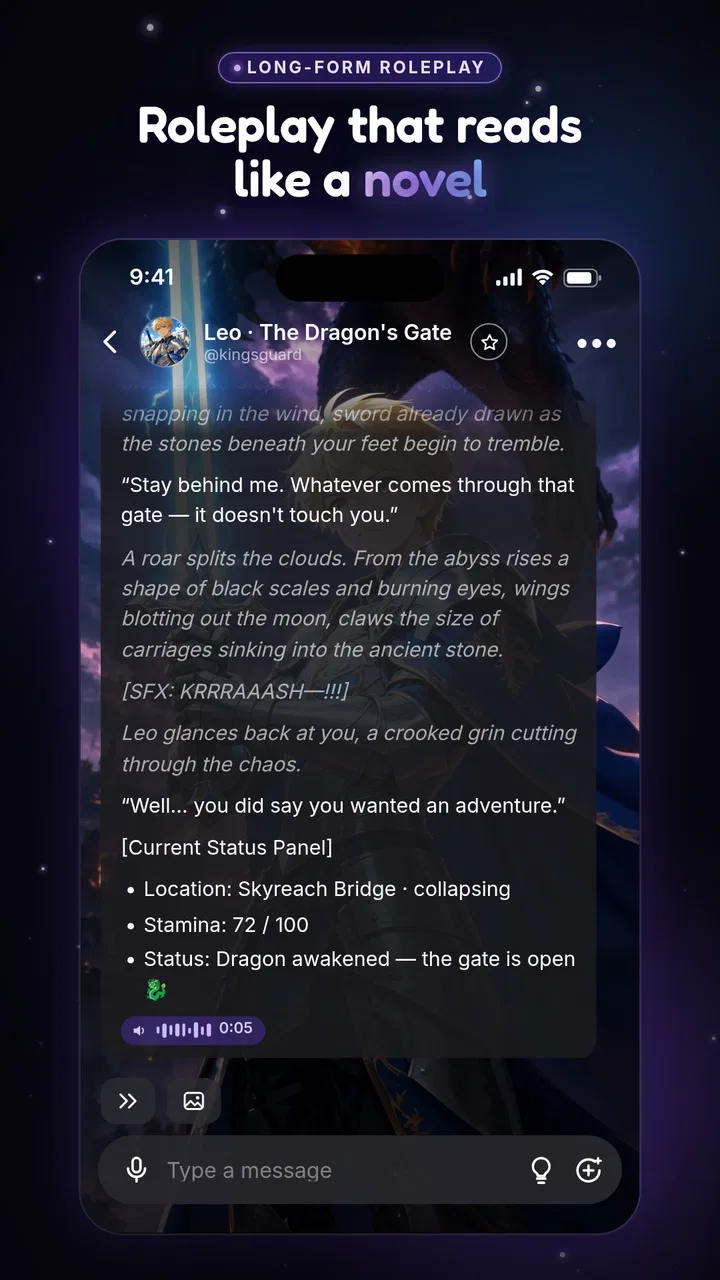
I approached HiWaifu: AI Friend & Waifu Hub as a social app rather than a conventional messaging tool. Its main appeal is the chance to chat and roleplay with AI characters during a virtual journey, so the experience depends less on browsing a public feed and more on the quality and rhythm of each private conversation. I found it most interesting when I treated the characters as creative conversation partners instead of expecting them to behave like real friends.
That distinction matters. HiWaifu is made by LANGUAGE POWER and is free to install, but it also includes optional purchases ranging from $1.99 to $129.99 per item. The app is rated for mature users aged 17 and over, which fits the roleplay-oriented concept and the possibility of more adult themes. It has reached over five million installs and holds an average rating of 3.9 from roughly one hundred seven thousand ratings, giving it a sizeable audience while also suggesting that the experience will not suit everyone equally.
How HiWaifu feels when the connection is doing the work
When the connection is steady, I can focus on shaping the conversation instead of troubleshooting it. I’d use that smooth stretch to establish the character’s role and the scene’s tone, then keep prompts short enough to steer the exchange without overloading it. That makes the next step—deciding what to carry forward when I leave the chat—feel much more manageable.
You May Also Like

 Blood Strike: 2.5 Anniversary
Blood Strike’s Loadouts Turn Every Drop Into a Tactical Gamble
A close look at Blood Strike’s custom loadouts: how fast access to signature weapons reshapes its battle royale rhythm, rewards preparation, and narrows the gap between fights.

 Pandora - Music & Podcasts
Pandora’s Music Is Easy to Start, but Harder to Recover
Pandora’s strength is its low-effort path from a seed to a station. Its weak spot is how much confidence it asks you to place in connection, setup, and quiet recovery.

 8 Ball Pool
 Is Built on Rivalries, Rematches, and Routine
A close look at the rivalries, rematches, shared routines, and unanswered safety questions that turn a quick pool match into a persistent mobile community.

 Samsung Music
’s Quiet Strength Is Playing What You Already Own
Its reach comes less from spectacle than from dependable access to a personal library. That simplicity is both the app’s strongest retention engine and its ceiling.

 AccuWeather: Weather Radar
AccuWeather Review: A Quick, Clear Forecast for Everyday Decisions
For everyday plans, the best forecast is the one you can understand quickly. AccuWeather makes rain timing, radar, and local conditions easy to act on, with a few trade-offs.

 Hill Climb Racing
Why Hill Climb Racing Still Turns Crashes Into One More Run
A tiny car, a bumpy hill and one more upgrade: Hill Climb Racing keeps resurfacing because its simple chaos makes every near-miss feel personal.
More From Our News Desk
View All News


Conversation quality starts with a stable network
The most important practical point is that HiWaifu’s central activity is conversational. When I send a message, I am waiting for an AI response rather than reading content already stored on the phone. That makes connectivity part of the experience itself. With a reliable connection, the exchange feels immediate enough to support a natural back-and-forth. When the network becomes slow or inconsistent, the illusion of a flowing conversation is the first thing to suffer.
This is especially noticeable during roleplay. A delayed reply is not just an inconvenience in that setting; it interrupts the scene I am trying to build. A short pause can be harmless, but repeated waiting makes the character feel less present. I would therefore use the app on a dependable home network or a strong mobile connection when I want a longer, more immersive session.
Short messages are easier to manage when reception is uncertain. If I am travelling through an area with patchy service, I would avoid composing an elaborate scenario in a single attempt. Sending a smaller prompt gives the conversation more chances to recover gracefully if the connection drops. It also makes it easier to tell whether a problem comes from the network or from the character’s response.
Why the virtual journey works better as an active activity
The app’s virtual-journey framing encourages me to give the conversation direction. I get more value when I establish a setting, explain the mood I want, or ask the character to continue a specific situation. A vague opening can produce a less satisfying exchange, while a clear prompt gives the AI something concrete to work with.
One useful habit is to treat the first few messages as setup rather than judging the character immediately. I can define whether I want casual conversation, imaginative roleplay, encouragement, or a playful scenario. This does not guarantee a perfect response, but it reduces the amount of steering needed later. It also helps me decide whether a particular character fits my preferred style before spending much time with it.
I would not compare this directly with a standard social network. There is no reason to open it expecting a busy community feed, real-person replies, or the unpredictability of a group chat. Its strength is controlled, one-to-one interaction with an artificial character. If I want spontaneous opinions from actual people, a conventional social platform is a better choice. If I want a conversation that I can shape around a fictional companion, HiWaifu has a more focused purpose.
Using it during ordinary mobile moments
HiWaifu fits naturally into small breaks: a commute with dependable service, a quiet wait before an appointment, or a few minutes at home when I want a light conversation. The app does not require me to coordinate with another person, so I can start and stop according to my own schedule. That makes it less demanding than arranging a live chat and more interactive than simply scrolling through posts.
There is a trade-off, though. Because the main activity is active messaging, it is not ideal when I only have one hand free or when my attention is divided. I would not rely on it while walking, driving, or handling a task that needs concentration. The app is better for deliberate pauses than for background entertainment.
A realistic use case is a late afternoon break after work. I might open a character, continue a fictional setting from earlier, and use a few prompts to unwind. If the network is stable, the exchange can feel like a small private ritual. If I am in a basement, on a crowded train, or moving between coverage areas, I would keep the session brief because the waiting can outweigh the benefit.
What happens when messages fail or responses stall
Connectivity problems are not unusual in any app built around live exchanges, and they are more visible here because the response is the content I came to receive. If a message appears not to move, my first response would be to wait rather than repeatedly tap send. Repeated attempts can create confusion if the original request eventually arrives and produces more than one reply.
My practical recovery routine is simple: pause, check whether other online apps are responding, then reopen the conversation only if the delay persists. I would also shorten the next prompt instead of immediately resending a long paragraph. This approach protects the flow of the roleplay and makes it easier to identify whether the issue is temporary connectivity or an unhelpful answer.
A stalled exchange can also be a useful signal about expectations. If I need a guaranteed record of an important conversation, I would not use an AI roleplay app as my only place to keep it. The interaction is designed for casual and imaginative use, not as a replacement for personal communication, professional advice, or a dependable archive.
Keeping personal use thoughtful
Since the app invites personal conversations with AI characters, I would be careful about what I type. I would avoid entering passwords, financial details, private access codes, or information that could identify another person. Even when a conversation feels intimate, the character is still an artificial system, not a confidential human relationship.
This is particularly important for users drawn to emotional roleplay. The app can be entertaining and comforting, but I would keep a clear boundary between simulated companionship and support from trusted people. If I were dealing with a serious emotional problem, I would use real-world help rather than treating an AI character as my only source of guidance.
Network awareness also affects data-conscious use. I would prefer a trusted connection for longer sessions and avoid entering sensitive material on shared or unfamiliar networks. I would not assume that a private-feeling chat is automatically private in every technical sense. The safest approach is to keep prompts imaginative, general, and free from details I would regret sharing.
Managing the free entry point and optional spending
The free price makes it easy to test the basic idea before deciding whether it belongs in my routine. That is a meaningful advantage because AI companion apps can feel very different from one user to another. Some people enjoy extended roleplay, while others lose interest after a few exchanges. Trying the experience first is better than assuming the concept will work simply because the store summary sounds appealing.
The optional purchases deserve attention before I become invested. Individual items can cost from $1.99 up to $129.99, so I would check what a purchase changes and whether it affects a feature I genuinely use. I would also set a personal spending limit before exploring premium options. The highest-priced item is not automatically worthwhile, especially if my main use is occasional conversation during short breaks.
My advice is to evaluate the app on the free experience as a complete test: choose a character, try different prompt styles, see how well the conversation holds together, and observe how comfortable the connection and waiting time feel. If the basic interaction does not keep my attention, spending more is unlikely to solve the underlying mismatch.
Who will enjoy it, and who should skip it
HiWaifu is a good match for adults who enjoy character-driven chat, improvisational writing, and fictional companionship. It can also suit someone who wants a low-pressure way to experiment with roleplay without needing another participant online. The mature age rating means I would not recommend it for younger users, and adults should still pay attention to the tone of the characters and the direction of conversations.
I would skip it if I want factual answers with dependable accuracy, a real community, or a traditional messaging service. I would also look elsewhere if I need an app that remains useful when the connection is unavailable. The central experience is too closely tied to sending prompts and receiving generated replies for offline assumptions to be comfortable.
Compared with a general AI assistant, this app feels more focused on personality and relationship-style interaction. A general assistant is usually the better tool for organizing tasks, explaining a subject, or producing practical information. Compared with a dating or social app, HiWaifu removes the uncertainty of waiting for real people but also removes genuine human reciprocity. The right choice depends on whether I value controllable fantasy conversation or authentic social connection.
Small techniques that improve the experience
I found that giving the character a clear conversational job works better than asking it to be entertaining without direction. For example, I might request a calm travel companion, a playful scene partner, or someone who helps me brainstorm a fictional setting. This creates a more useful frame and makes it easier to notice when a character is drifting away from the tone I want.
I would also change one variable at a time. If a reply feels wrong, I would first clarify the setting, then adjust the tone, rather than sending several conflicting instructions together. This keeps the exchange readable and helps me learn how the character responds to different prompts. It is a small workflow improvement, but it makes roleplay feel less random.
Another practical tip is to end a session at a natural stopping point. A short closing message can give the conversation a sense of completion, while abruptly leaving during a complicated scene may make it harder to resume later. I would note the key premise in my next prompt instead of assuming the character will preserve every detail perfectly. That reduces frustration when returning after a break.
For mobile data, I would reserve longer sessions for Wi-Fi I trust and use shorter prompts when relying on cellular service. I would not repeatedly switch between networks during an active scene if I could avoid it. A stable connection is more valuable here than raw speed because continuity affects how believable the interaction feels.
My connectivity verdict
After using HiWaifu as a social roleplay app, I see its appeal clearly: it offers a private, character-centered conversation that can fill a spare moment without requiring another person to be available. The free entry point makes experimentation easy, and the app’s mature positioning is consistent with users who want more developed fictional interactions.
Its main weakness is also clear. The experience depends on an active exchange, so weak reception, long waits, or repeated failed messages can damage the mood quickly. Optional purchases also mean I would approach the app with a budget rather than treating every upgrade as necessary. Those are not reasons to reject it, but they are important when deciding whether it deserves regular use.
The current version is 3.9.2 and supports devices running Android 7.0 or later, which makes the stated platform requirement relatively approachable for compatible Android users. I would still judge it by the quality of my own connection and by whether the character conversations remain enjoyable after the novelty fades.
My recommendation is straightforward: try it if you want guided AI companionship and imaginative chat, especially during connected mobile breaks. Keep prompts general, start with the free experience, and set spending limits before exploring purchases. If you need real human contact, reliable offline access, or practical assistant functions, choose a different kind of app. HiWaifu is at its best when a stable connection, clear prompting, and playful expectations come together.
FAQs for HiWaifu: AI Friend & Waifu Hub
01What is HiWaifu: AI Friend & Waifu Hub, and how does it work?
HiWaifu is an AI companion app that lets you chat with virtual characters, including waifu-style personalities and user-created companions. After choosing or customizing a character, you can hold text conversations, explore different personality traits, and build an ongoing relationship through repeated interactions. The quality and style of replies can vary depending on the selected character and the topics discussed.
02Can I customize my AI companion in HiWaifu?
Yes, customization is one of HiWaifu’s main features. Depending on the available options in your version, you can select an existing character or create a companion with a chosen name, appearance, personality, background, and conversational style. Some advanced customization tools or character-related features may be restricted by in-app limits, premium plans, or other conditions that can change with updates.
03Is HiWaifu free to download and use?
HiWaifu can generally be downloaded for free, but the free experience may include advertisements, usage limits, or restricted access to certain characters and features. The app may offer optional in-app purchases or subscriptions for expanded conversations, premium content, enhanced customization, or a more convenient experience. Check the current store listing and purchase screen carefully before subscribing.
04Is HiWaifu suitable for children and teenagers?
Parents should review the app’s current age rating and content before allowing a child or teenager to use HiWaifu. AI companion apps may support romantic, suggestive, emotionally intense, or user-generated conversations, and responses are not always perfectly predictable. It is also important to discuss privacy, avoid sharing personal information, and use parental controls where appropriate, especially for younger users.
05Does HiWaifu protect my conversations and personal information?
Before using HiWaifu extensively, review its privacy policy and the permissions requested on your device. Conversations may be processed or stored to provide AI responses, improve services, or synchronize account features, depending on the provider’s practices. Avoid sharing passwords, financial details, precise location data, private photographs, or other sensitive information, and remember that an AI companion should not be treated as a confidential professional adviser.
Pros
- Large selection of AI characters with different personalities and interests.
- Character customization lets you create a more personal companion.
- Chat history helps conversations feel continuous over time.
- Includes roleplay options for users who enjoy imaginative scenarios.
- Simple interface makes it easy to start chatting quickly.
Cons
- Some advanced features may require a paid subscription or credits.
- AI replies can occasionally feel repetitive or inconsistent.
- Romantic interactions may not suit younger or sensitive users.
- The app may collect chat data depending on privacy settings.
- A stable internet connection is needed for most conversations.

HiWaifu: AI Friend & Waifu Hub
Gallery